
All products · 2 of 1440
Electronics, sensors, robotics kits, PC components, peripherals — everything Unik Systems carries, in one place.
 Out of stock
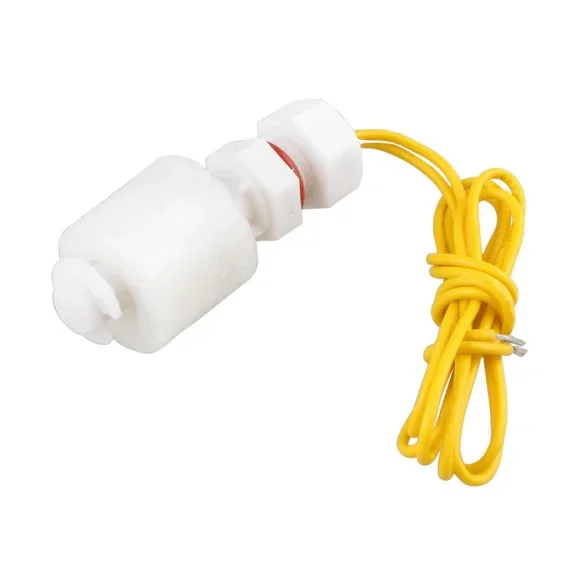
ZP4510 P45 Water Level Sensor Float Control Switch
[Water Level Sensor] A float switch is a device used to sense the level of liquid within a tank, it may actuate a pump, an indicator, an alarm, or another device. A float switch is a device used to sense the level of liquid within a tank. The switch may actuate a pump, an indicator, an alarm, or another device. Use them with hydroponics, saltwater tank, freshwater tank, gardening, aquariums for power head control, pet bowls, fish tanks, filtration, heating, pumps, ponds, basement alarms, boats, air condition drain pans, pressure washers, carpet cleaning machine, reef aquarium, fluid control, ice machines, coffee pots, marine, automotive, automobiles, tropical fish tanks, evaporator coils, condensation line, in relays, or whatever your project may be. It can be easily converted from normally open to normally close by inverting the float. Note: because the current that the switch can carry is much little(0.5A), you must use a relay or contactor when it is connected by a load, relay and contactor are not included here. Specifications:- Cable Length: 30.5(cm) Maximum Load: 50 W Max Switching Voltage: 100V DC Minimum Voltage: 250V DC Maximum Switching Current: 0.5 A Max Load Current: 1.0 A Max Contact Resistance: 0.4 ΩTemp Rating: -20~ 80 degree Applications:- Household Equipment such as overhead water tanks, Water purifiers. Use them with hydroponics, saltwater tank, freshwater tank, gardening, aquariums for power head control, pet bowls, fish tanks, filtration, heating, or whatever your project may be. Up float switch Contains no mercury Product. How Magnetic Reed Liquid Level Sensors Work:- The purpose of a float switch is to open or close a circuit as the level of a liquid rises or falls. Most float switches are "normally closed," meaning the two wires coming from the top of the switch complete a circuit when the float is at its low point, resting on its bottom clip or stop (for example, when a tank is dry). Most float switches utilize a magnetic reed switch to open or close the circuit. The reed is encased in a glass tube, which is cemented into a plastic or stainless steel stem with epoxy. The illustration to the left demonstrates how a magnet can be used to open or close a circuit by moving it closer to or farther away from a reed switch. When the magnet comes close to the two contacts, they draw together and touch, allowing the current to pass through. When the magnet is moved away, the contacts demagnetize and separate, breaking the circuit. In a float switch, the magnetic reed switch is hermetically sealed in a stem, most often made from plastic or stainless steel. The float encases a sealed magnet, which moves up and down the length of the stem as a fluid level rises and falls. As the magnet passes by the contacts in the encased reed switch, they draw together and complete a circuit between the two lead wires. The operation shown can usually be reversed by removing the bottom clip from the switch, inverting the float, and replacing the clip. When this change is made, the switch circuit will be open when the float is resting on the bottom clip and closed when the float rises. Properly used, float switches can deliver millions of on/off cycles, for years of dependable operation. Failures are normally due to overloading, frequently caused by spiking voltage. Before designing a circuit that uses a float switch, be sure to read our Technical Page on Spiking Voltage & Float Switches. * Product Images are shown for illustrative purposes only and may differ from the actual products.
 Out of stock
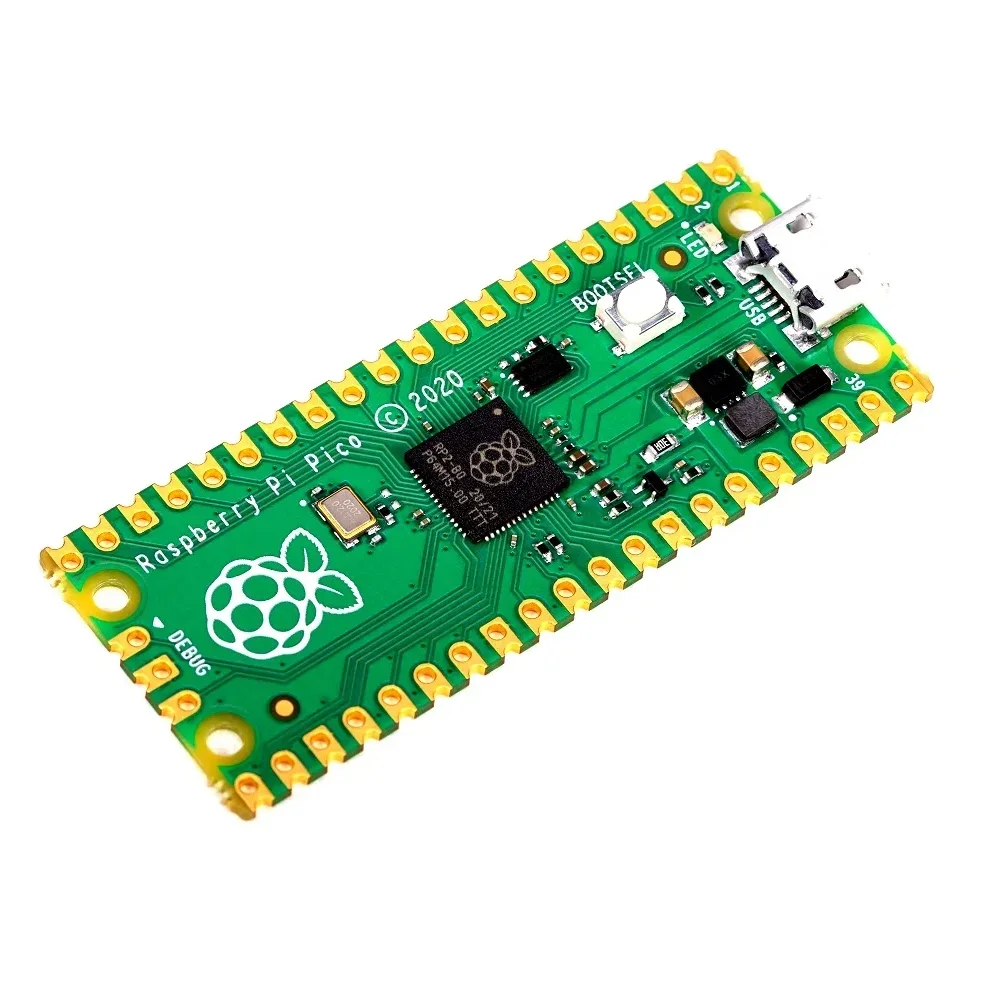
Raspberry Pi Pico Original Version Dual-core Arm Cortex
[Raspberry Pi] Raspberry Pi Pico Original Version Dual-core Arm Cortex Description: Almost one and half-year before Raspberry had launched a revolutionary update on their Single Board Computer (SBC) Pi 3 and become the most popular Microcontroller board in the community which is known as a Raspberry pi 4. On the same timeline, the Raspberry pi foundation came with a new astonishing SBC named a Raspberry Pi PICO. The main highlighted thing about RPI PICO it is the Lowest cost and Smallest size development board from Raspberry pi Foundation. On the technical side, it is equipped with an RP2040 Microcontroller chip developed by Raspberry Pi Foundation itself. RP400 is their first dual-core ARM Cortex M0+ processor-based latest small-sized, budget-friendly microcontroller. The RP2040 is supported with both c / c ++ and micro-python, meaning that if you’re a beginner and want to learn any of these languages, the Raspberry Pico would be the best product-option to start with. Key Features 21 mm x 51 mm form factor RP2040 microcontroller chip designed by Raspberry Pi in the UK Dual-core Arm Cortex-M0+ processor, the flexible clock running up to 133 MHz 264KB on-chip SRAM 2MB onboard QSPI Flash 26 multifunction GPIO pins, including 3 analog inputs 2 x UART, 2 x SPI controllers, 2 x I2C controllers, 16 x PWM channels 1 x USB 1.1 controller and PHY, with host and device support 8 x Programmable I/O (PIO) state machines for custom peripheral support Supported input power 1.8-5.5V DC Operating temperature -20C to +85C The castellated module allows soldering directly to carrier boards Drag-and-drop programming using mass storage over USB Low-power sleep and dormant modes Accurate on-chip clock Temperature sensor Accelerated integer and floating-point libraries on-chip Package Content 1 X Raspberry Pi Pico