
tutorials
Dual-Axis Automatic Solar Tracking System Using LDR Sensors & Arduino
Boost photovoltaic solar panel efficiency by up to 40% with an automated dual-axis heliostat solar tracker that follows the sun across both azimuth and elevation axes.
Kunal (Founder & Owner) 1 min read6 Oct 2026
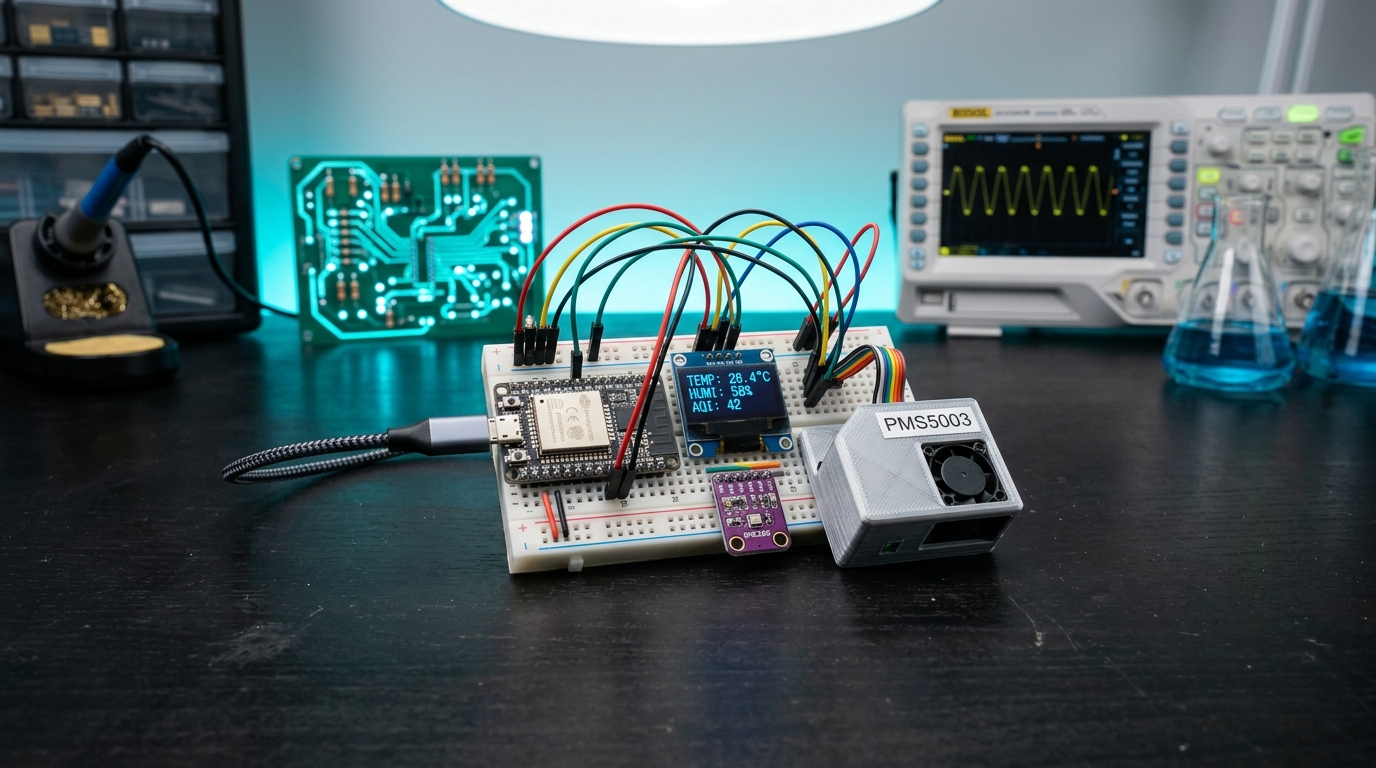
Dual-Axis Automatic Solar Tracking System Using LDR Sensors & Arduino
Fixed photovoltaic panels capture peak sunlight only during a narrow midday window. By mounting panels on an automated dual-axis gimbal driven by two MG90S metal-gear servos and four light-dependent resistors (LDRs) partitioned by an optical cross baffle, solar conversion efficiency increases by up to 35%–40%.
1. Light Quadrant Principle
Four LDRs (Top-Left, Top-Right, Bottom-Left, Bottom-Right) measure ambient lux:
- If
(Top-Left + Top-Right) > (Bottom-Left + Bottom-Right), tilt the vertical elevation servo UP. - If
(Top-Left + Bottom-Left) > (Top-Right + Bottom-Right), pan the horizontal azimuth servo LEFT.
Parts used in this tutorial
Buy them in one click — ships from Pune across India.
- Arduino UNOMicrocontrollers₹265.58+ GST
- TowerPro Metal Gear MG90S Mini Digital Servo Motor (180° Rotation)Motors & Actuators₹179.00+ GST
- Solderless 800-pin BreadboardConnectors & Wires₹59.19+ GST


Approx. total ₹503.77 (before GST)Add all to cart
#solar#green-energy#robotics
Found this useful? Tell us what you'd like to read next via our RFQ form.